AI-Ready Data Definition
AI-ready data is business data that is accurate, consistent, well-organized, and clearly described, so that artificial intelligence (AI) tools can use it to produce reliable answers, predictions, or content. It isn't a special kind of data. It's the same product, customer, and supplier records a company already has, cleaned up to the point where a machine can trust them.
What makes data AI-ready?
- Accurate and complete: values are correct, and required fields are actually filled in, not left blank or marked "TBD"
- Consistent: the same thing is recorded the same way everywhere, for example one date format, one unit for weight, and one name per supplier
- Structured: information sits in defined fields (color, size, material) instead of being buried in free-text notes
- Clearly described: each field has a documented meaning, often stored as metadata (data that describes other data), so an AI tool knows whether "weight" means shipping weight in kilograms or net weight in pounds
- Governed: it's clear who owns each record, where it came from, and when it last changed
Why isn't most business data AI-ready already?
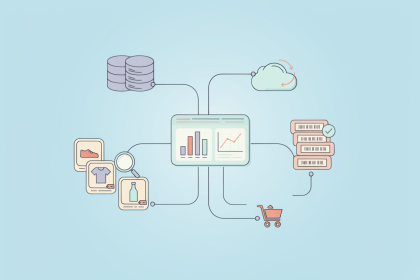
Most companies collect data in many separate places over the years: an ERP (enterprise resource planning) system for orders and finance, a CRM (customer relationship management) system for customer contacts, and spreadsheets for everything in between. Each one holds its own version of the truth. The same customer might appear three times with slightly different addresses, or a product might have one description on the website and another in the printed catalog.
People work around these gaps without noticing. AI tools can't. They take the data at face value and repeat its mistakes at scale, often in answers that sound confident.
How do companies make their data AI-ready?
The usual first step is to fix the core business records (products, customers, suppliers, locations) before pointing AI at them. This is what Master Data Management (MDM) does. It pulls these records together from different systems, removes duplicates, applies agreed rules and formats, and keeps one trusted version that every other system, and every AI tool, draws from. For product data specifically, many businesses also use a Product Information Management (PIM) system to manage detailed attributes, descriptions, and images.
In practice, getting data AI-ready has less to do with the AI itself and more to do with ongoing data management habits. That work starts well before any AI project and continues after it.