Data Mapping Definition
Data Mapping is the process of defining how fields from one system or data source correspond to fields in another: establishing which value goes where, and what transformation (if any) is needed to make the data compatible.
When is data mapping used?
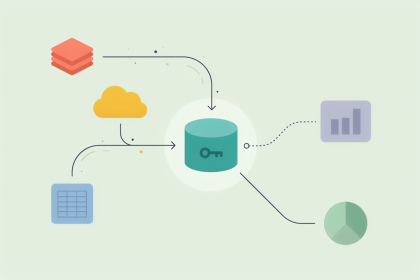
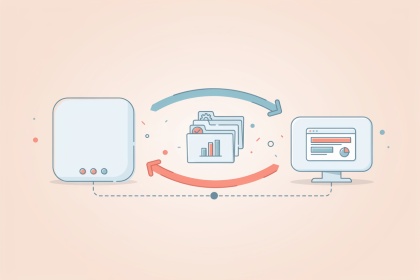
It is a required step in almost every integration project: connecting an ERP to an ecommerce platform, migrating data from a legacy system, importing a supplier's product catalogue, or feeding data into a data warehouse. Whenever two systems need to exchange data that was designed independently, a map is needed to translate between them.
What does a data mapping document contain?
A mapping document lists source fields alongside their target equivalents and notes any transformation required. For example: source field cust_no (integer) maps to target field CustomerID (string) with a transformation to add a country prefix. It also records what happens when a source field has no target equivalent, or when a required target field has no source: decisions that must be made explicitly rather than left to the integration tool to guess.
How does data mapping relate to data models and ETL?
A data model defines the structure of each system in isolation. Data mapping defines the relationship between two models. In an ETL or ELT process, the mapping document becomes the specification that the transformation step implements. Errors in the mapping (wrong field matched, wrong data type assumed) are one of the most common causes of integration failures.