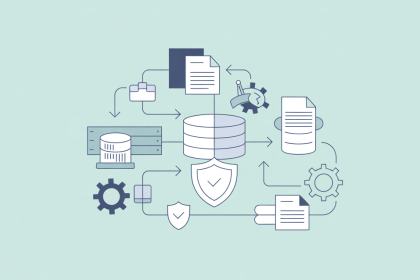
ELT Definition
ELT (Extract, Load, Transform) is a data integration approach in which data is first extracted from source systems and loaded into a destination system in its raw form, and then transformed inside that destination. It follows the same three steps as ETL but in a different order. The transformation happens after loading, not before.
How does ELT differ from ETL in practice?
The key distinction is where the transformation work happens. In ETL, a separate processing layer cleans and reshapes data before it ever reaches the destination. In ELT, the destination system itself, typically a modern cloud data warehouse, handles the transformation using its own compute resources.
This makes ELT well-suited to platforms like BigQuery, Snowflake, or Redshift, which are designed to process very large volumes of data quickly. Analysts and engineers can write transformation logic directly in SQL, iterate on it, and rerun it against the already-loaded raw data without re-extracting from the source.
What are the practical trade-offs?
ELT allows teams to load data quickly and decide how to transform it later, which is useful when requirements are still evolving. It also preserves the raw source data, making it easier to reprocess if transformation logic changes. The trade-off is that the destination system must be capable of handling the processing load, and sensitive raw data is stored in the warehouse before any filtering or masking is applied.
ETL, by contrast, gives more control over what data enters the destination and is often preferred when transformation rules are well-defined, when the destination system has limited processing capacity, or when data must be cleaned and validated before storage for compliance reasons.
Where does ELT fit in a data architecture?
ELT is common in analytics and reporting pipelines, particularly in organisations using a Data Warehouse as a central analytical store. It is less commonly used in operational contexts like MDM or PIM platforms, where data quality rules typically need to be enforced at the point of entry rather than applied retrospectively. For a comparison of how cloud and on-premise MDM deployments handle data integration differently, see Master Data Management Cloud and On-Premise Master Data Management Solutions.