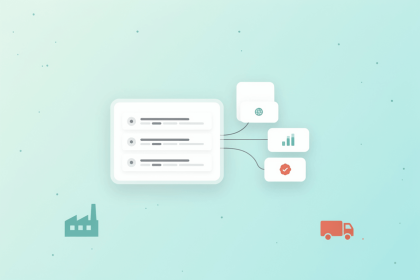
ERP Migration Definition
Enterprise Resource Planning (ERP) migration is the process of moving a company's data, business processes, and system connections from one ERP system to another. The move can be to a different vendor's product, a newer version of the same product, or from servers in the company's own building to the cloud. An ERP is the central software many companies use to run orders, purchasing, inventory, production, and finance, so a migration affects almost every part of the business.
Why do companies migrate their ERP?
- End of support: the vendor stops releasing updates and security fixes for the current version
- Growth: the business has added locations, sales channels, or product lines that the old system can't handle well
- Moving to the cloud: to reduce the effort of running and maintaining servers in-house
- Mergers and acquisitions: two companies need to run on one shared system
What does an ERP migration involve?
Moving the data is only one part of the work. A typical project also involves deciding which business processes carry over unchanged and which need to adapt to the new system. Every system that exchanges data with the ERP has to be reconnected, such as the online store, warehouse system, and CRM (customer relationship management) software. The new system then goes through trial runs before cutover, the moment the old system is switched off and the new one takes over. Staff training usually runs alongside all of this.
Why is the data the hardest part?
Over the years, an ERP collects duplicate records, outdated customers and suppliers, and the same information entered in different formats. If that data is moved as it is, the problems move with it. A new ERP often has stricter rules about how data must be structured, so messy records either fail to load or cause errors after go-live. Most teams therefore clean their data before the move: they check what they have, remove duplicates, and agree on standards in writing. These are the same steps used to set up master data management, explained in Master Data Management Plan: From Data Audit to Golden Record.
What happens to the systems connected to the ERP?
Each system connected directly to the old ERP needs its connection rebuilt, and in companies with many direct connections this can become a large share of the project. Companies that send data through a central integration layer, a hub that sits between the ERP and other systems, usually only need to replace the one connection between the hub and the ERP. Some also run the old and new ERP side by side for a while and compare their results before fully switching over. For more on how this works in practice, see Software Integration Platform: Trends And Risks For Connecting ERP, PIM, And Commerce In 2026.