Data Migration Definition
Data migration is the process of moving data from one system, storage location, or format to another, for example from spreadsheets or a legacy ERP into a new PIM or MDM system. A migration is more than a copy: data is typically extracted, cleaned, restructured, and validated before it is loaded into the target system.
When do businesses migrate data?
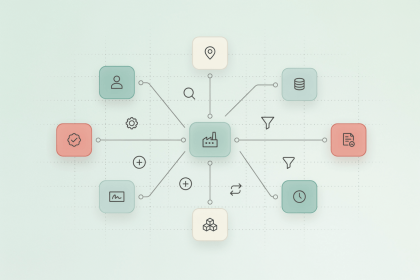
Common triggers include replacing an outdated system, adopting a PIM or MDM platform for the first time, consolidating data from several siloed systems into a single source of truth, or moving from on-premise infrastructure to the cloud.
How does a migration work?
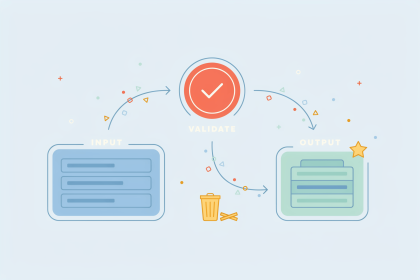
Most migrations follow the same broad sequence: an audit of the source data, mapping between the old and new structures, cleansing and deduplication, a test migration on a subset of records, validation against a unified schema and set of business rules, and finally the full move, done either all at once ("big bang") or in waves.
Why do migration projects fail?
The most common causes are underestimated complexity and poor source data quality. Problems that were invisible in the old system, such as duplicates, missing values, and inconsistent formats, surface during the move. This is why cleansing and validation before migration usually take longer than the transfer itself, and why migration and initial cleansing are among the most undercounted costs in data management projects.