Product Classification Definition
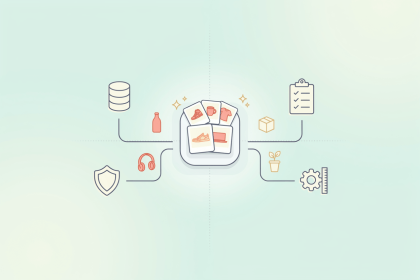
Product classification is the practice of organising products into defined groups and categories according to shared characteristics, so they can be found, compared, and managed consistently. It answers a basic question for every product: where does this belong. Classification can follow a business's own structure, or a recognised industry standard such as ETIM, eCl@ss, UNSPSC, or GPC, which give every product a standard category and a common set of attributes. For example, product classification determines that a cordless drill belongs under power tools, with the specific attributes that category expects.
How is product classification different from a taxonomy?
The two are closely related but not the same. A taxonomy is the classification scheme itself: the structure of categories and how they relate to one another. Product classification is the act of assigning each product to the right place within that structure. Put simply, the taxonomy is the map and classification is placing each product on it. A single product can also be classified in more than one scheme at once, for example under a company's internal categories for navigation and under an industry standard for exchanging data with partners.
Why do classification standards matter?
Industry standards give trading partners a shared language for describing products. When a supplier and a retailer both classify an item using the same standard, they agree not only on its category but on which attributes should be provided and how they are named. This makes it far easier to exchange product data between systems and businesses without lengthy manual mapping. Standards are especially important in sectors like manufacturing, construction, and electronics, where products have many technical attributes and are traded across long supply chains.
Why does product classification matter for product data?
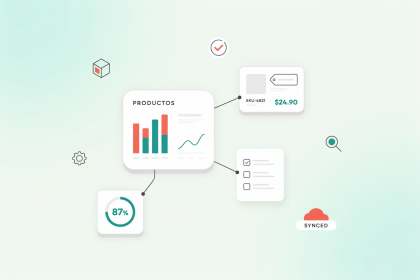
Classification is the backbone that makes a large catalog usable. It drives how customers browse and filter products, which attributes each product is expected to have, and how completeness is measured against those expectations. Consistent classification also underpins accurate search, comparison, and reporting, and it makes product data easier to syndicate to marketplaces and partners that expect items to arrive in a known category. Because so much depends on it, classification is usually managed centrally in a PIM, so every product is categorised once and used consistently everywhere.