Metadata Management Definition
Metadata Management is the practice of defining, collecting, organising, and maintaining metadata — the descriptive information that explains what a piece of data is, where it came from, how it is structured, and how it should be used. If data is the content, metadata is the label, filing system, and instruction manual wrapped into one.
What does metadata actually include?
Metadata covers a wide range of descriptive attributes depending on the context. Common examples include:
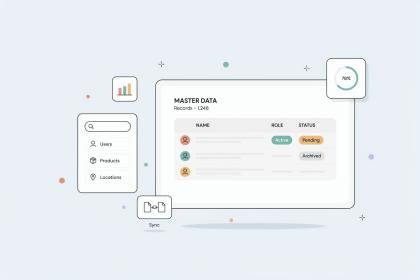
- Descriptive metadata — the name, title, or label of a data field (e.g., "product weight")
- Structural metadata — how data is formatted or linked to other data (e.g., weight is a decimal, measured in kilograms, belonging to the physical attributes group)
- Administrative metadata — who created a record, when it was last updated, and who owns it
- Lineage metadata — where the data originated and how it has changed over time (see Data Lineage)
Why does metadata management matter?
Without it, data becomes difficult to find, interpret, and trust. Two teams might store "revenue" in different fields with different currencies and calculation methods, and no one would know until a report produces conflicting numbers. Managed metadata makes data self-explanatory — any person or system accessing a field knows exactly what it contains and how to use it.
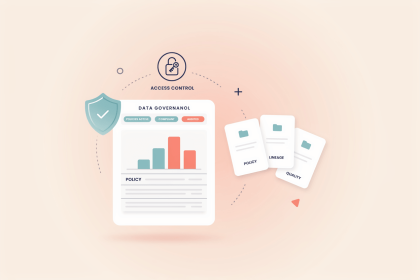
It is also foundational to Master Data Management and Data Governance: you cannot govern data you cannot describe, and you cannot manage master records without knowing what each field means.
Who is responsible for it?
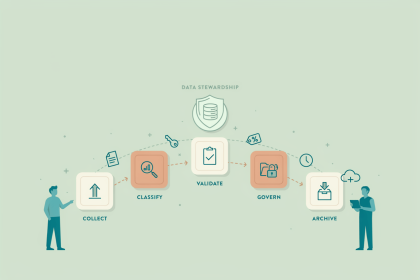
Metadata management is typically overseen by a Data Steward or data governance team, but it requires input from the people who actually create and use the data — product managers, IT architects, and business analysts. In larger organisations it is supported by a Data Catalog, a tool that stores and makes metadata searchable across systems.