Connector Definition
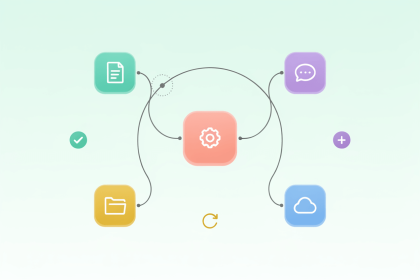
A connector is a prebuilt software component that links two systems so they can exchange data without custom-built code. It handles the technical details of talking to a specific application, including how to authenticate, what format to send and receive, and which fields map to which, so that a PIM can pass product data to an online store, or an ERP can share inventory levels with a marketplace. In practice, a connector is the ready-made "adapter" for one particular system, as opposed to an integration written from scratch.
How is a connector different from an API?
An API is the interface a system exposes so that others can read or write its data; a connector is the piece that actually uses that interface on your behalf. Put simply, the API is the socket and the connector is the plug already wired to fit it. A connector typically calls one or more APIs behind the scenes, but adds the mapping, authentication, and error handling needed to make a specific integration work, so you configure it rather than build it. When no connector exists for a system, integrators fall back to working with its API directly.
What does a connector actually do?
Most connectors handle a common set of tasks so each integration behaves predictably:
- Authentication: logging in securely to the connected system and keeping that access valid
- Data mapping: matching fields in one system to the equivalent fields in the other, so a "product title" in one place lands in the right field elsewhere
- Format translation: converting data between the structures each system expects
- Sync scheduling: moving data on a trigger or timetable, whether in real time or in batches
- Error handling: catching failed records and retrying or reporting them rather than losing them silently
Why do connectors matter for product data?
Product information rarely lives in one place: it is created in a PIM, priced in an ERP, and published to storefronts and marketplaces. Connectors let these systems share the same data automatically, so a change made once flows everywhere it is needed. This reduces manual re-entry, keeps information consistent across channels, and shortens the time it takes to launch or update products. Prebuilt connectors also lower the cost and risk of integration, since a tested component for a common system is faster to deploy, and easier to maintain, than a one-off build.